Every trade starts as a conversation. A message, a call, an email. The price is agreed, the quantity, the shipment period, the quality. Then someone opens a blank contract and types the whole thing in again.
The gap between agreeing and recording
Retyping is where terms drift. A shipment period copied from the previous contract. A price basis that changed on the phone. A counterparty with two entities and the wrong one selected. And the contract that should go out the same day goes out the next morning, because the person who agreed it is back on the phone making the next deal.
What we are building
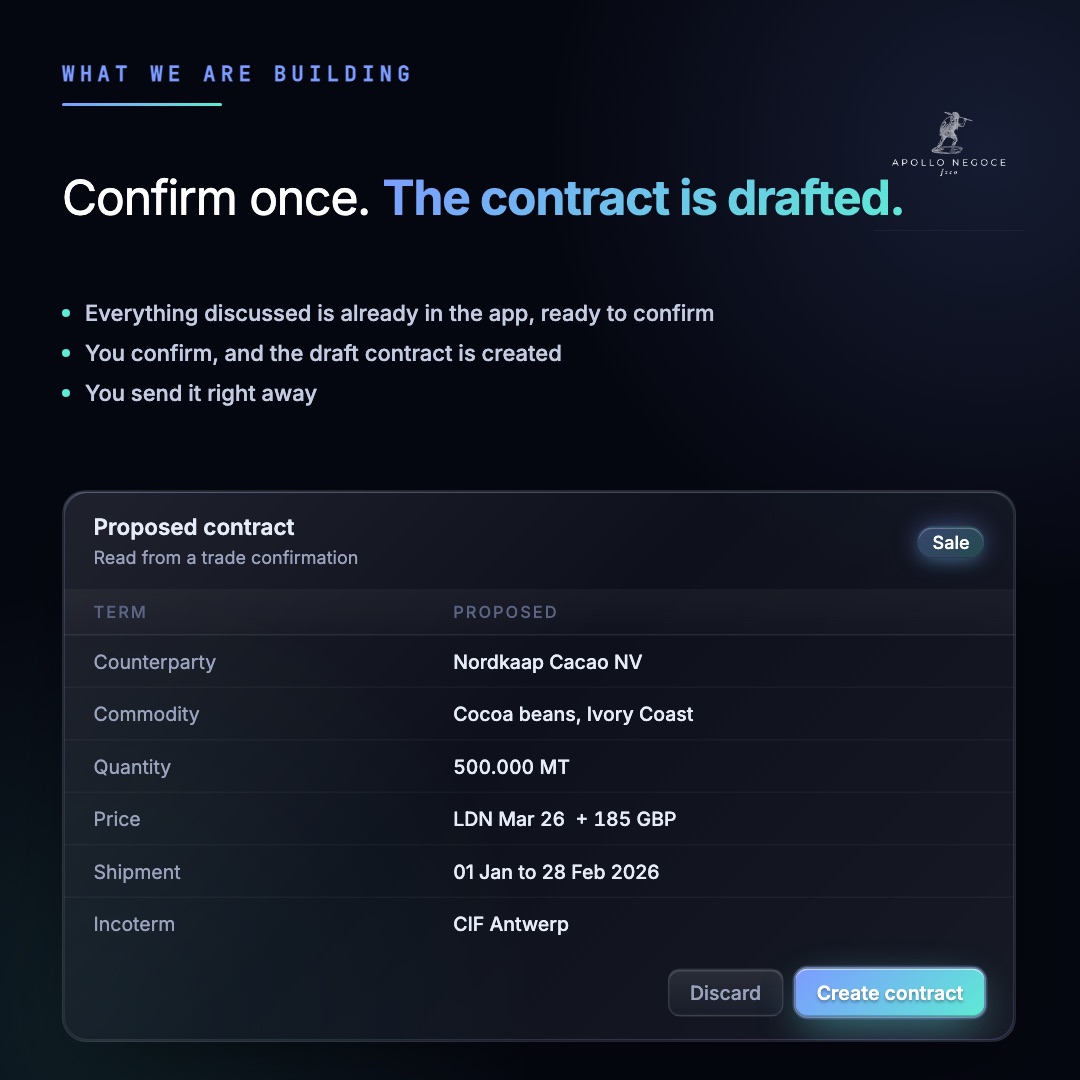
Apollo Negoce is building the part in between. What you agreed is already in the platform, ready to confirm: counterparty, commodity, quantity, price, shipment and incoterm. You confirm, the draft contract is created, and it goes out within minutes rather than the next morning. The deal starts executing while it is still fresh.
One book, not five spreadsheets
The other half of the problem is where the contract lands. On many desks it lands in one of five spreadsheets in five different folders, each one slightly out of date, none of them the one everybody trusts.
In Apollo everything sits by book, in one place, and every sale is matched to the purchase that supplies it. The position, the shipments and the invoices all start from that same record.
More than a dashboard. A source of truth.
For how a confirmation sent by WhatsApp or email is read into a contract, see Contracts entered for you.
Frequently asked questions
Why is contract entry slow on a physical trading desk?
Because the terms are agreed in one place and recorded in another. Someone retypes price, quantity, shipment period and quality into a blank contract, usually after the call, and errors appear when terms are copied from a previous contract.
How does Apollo Negoce turn a trade confirmation into a contract?
The terms agreed in the confirmation are read into a proposed contract. Nothing is created until a person confirms it, and the draft contract can then be sent within minutes.
What does trading by book mean?
Every contract belongs to a book, and every sale is matched to the purchase that supplies it, so the desk works from one record instead of a set of separate spreadsheets.