Every desk knows its total. Few can say, without a phone call, which bay in which shed holds the lot that covers the sale leaving next week.
The total is easy. It is the sum of the last warehouse report, adjusted for what came in and what went out. The hard question is the second one: where, exactly. And it is the one that decides whether a sale ships on time.
A lot, not a line in a spreadsheet
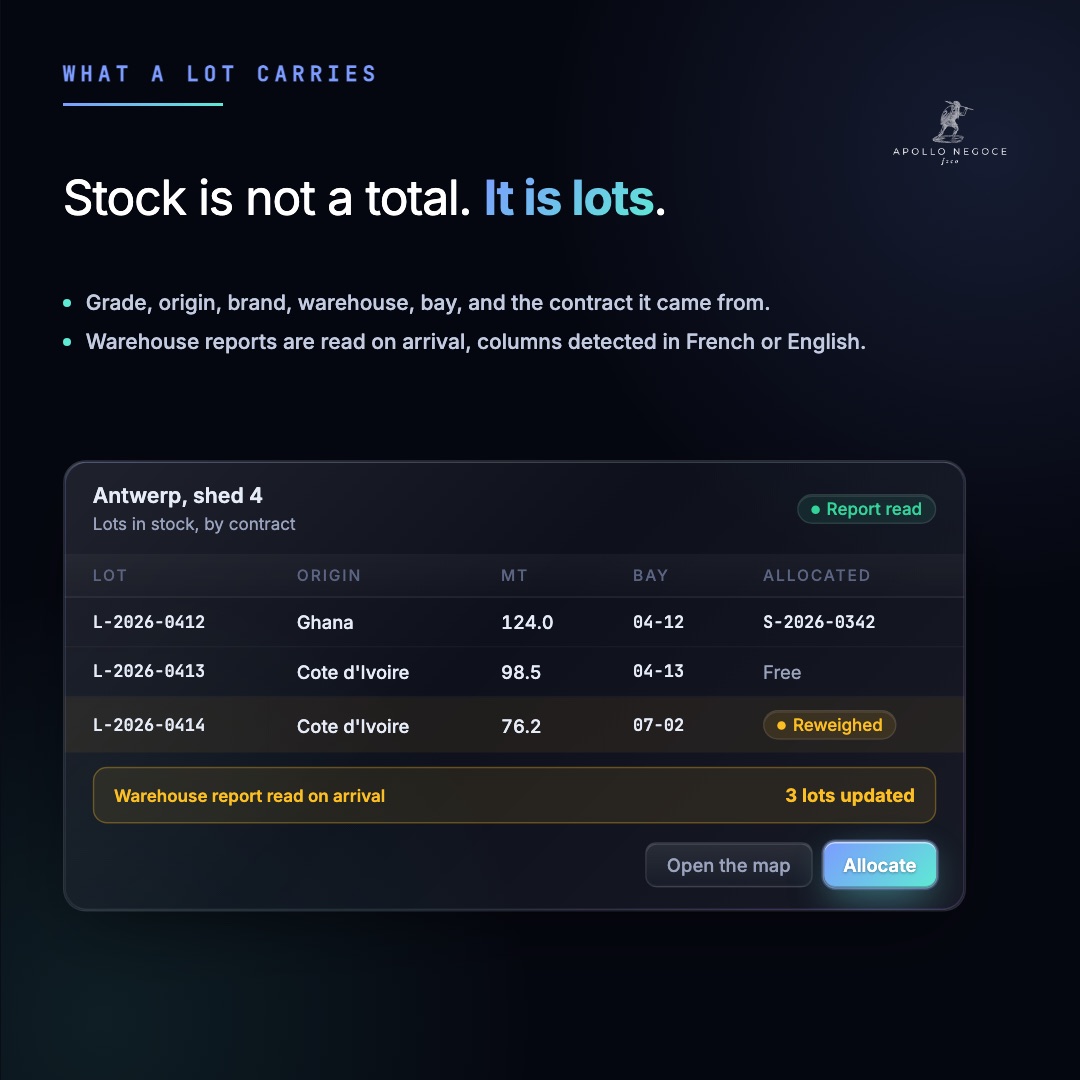
In Apollo, stock is not a total. It is lots. Each lot carries everything you would otherwise have to ask the warehouse for:
- the commodity and its grade
- the origin and the brand
- the warehouse, and the exact location inside it
- the date it came in
- the contract it came from
- its status
A lot then lives its life in the system. It can be split, even container by container. It can be reweighed against a scale ticket. It can be allocated to a contract, and released when the goods leave. The weight follows the lot, not a line in a spreadsheet.
Warehouse reports, read instead of retyped
Third-party warehouses send their reports in their own layout, often in French, sometimes in English, rarely twice the same way. In Apollo the report is read when it arrives. The columns (lot, product, grade, quantity, net weight) are detected on their own, in either language, and the lots are updated from what the report says.
Nobody retypes a stock statement, and nobody has to guess which column the warehouse moved this month. For the monthly comparison between the book and the warehouses, see Stock reconciled every month.
Afloat is not in the shed
Cargo in transit and cargo afloat are held apart from what sits in a warehouse. It is a small rule with large consequences: goods on the water are not goods you can ship again, and counting them as available stock is how a desk sells the same tonnes twice.
A tonne you cannot point at is not stock.
Frequently asked questions
What is lot-level inventory in physical commodity trading?
It means tracking stock as individual lots rather than one total per warehouse. Each lot carries its commodity, grade, origin, brand, warehouse and location inside it, entry date, the contract it came from and its status, so the desk knows exactly which goods cover which sale.
Can Apollo Negoce read warehouse stock reports?
Yes. A warehouse report is read on arrival: its columns are detected automatically, in French or in English, and the lots are updated from what the report says. Nothing is retyped.
Can a lot be split or reweighed?
Yes. A lot can be split, including container by container, reweighed from a scale ticket, allocated to a contract and released when the goods leave the warehouse.
How is stock in transit handled?
Cargo in transit and afloat is held apart from stock in a warehouse, because goods on the water cannot be shipped again and should never be counted as available stock.