You send the same enquiry to five carriers. You get five different shapes back. A PDF. A mail body. A screenshot of somebody's spreadsheet.
Then you compare them in your head.
One request out, five answers in one shape
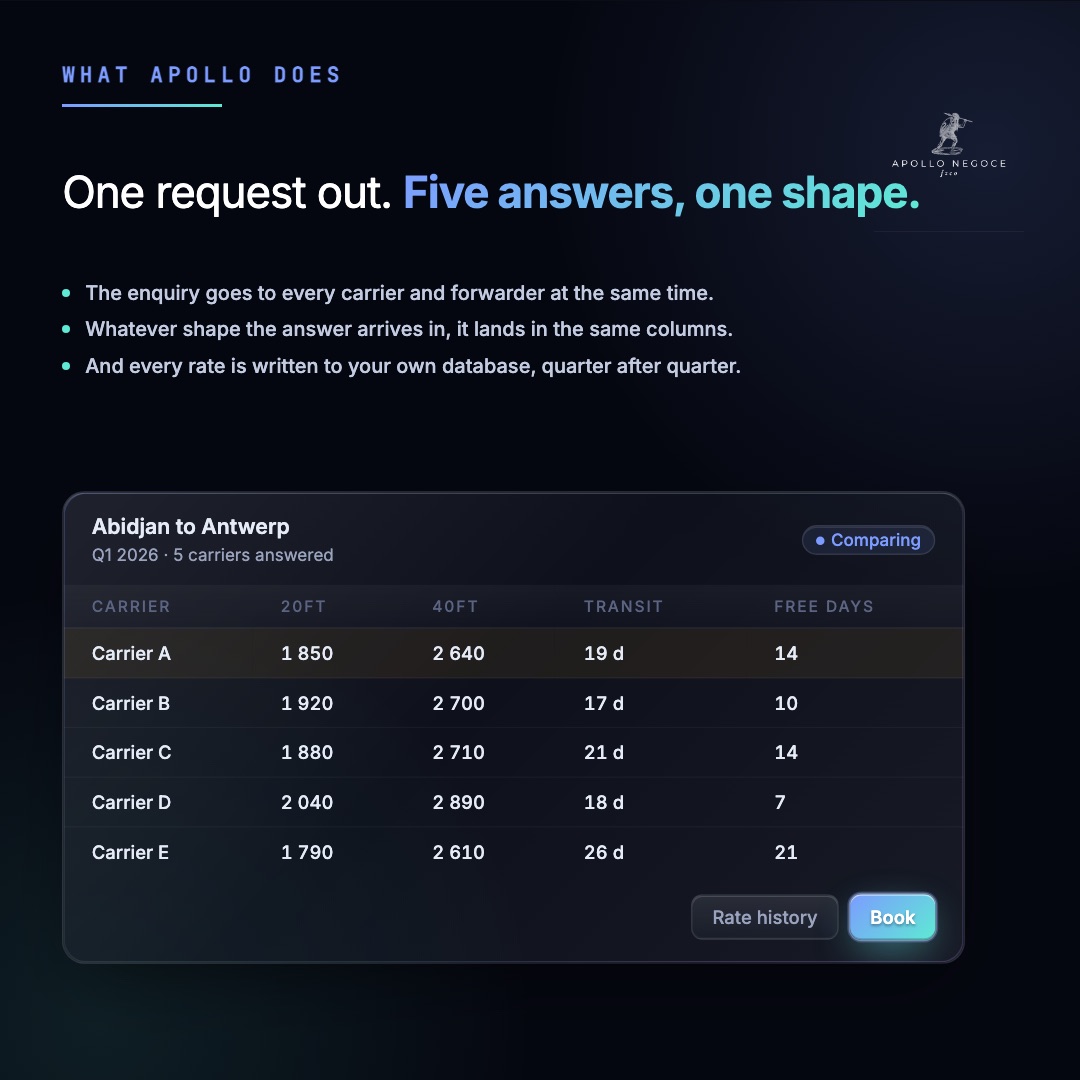
Apollo sends the enquiry to every carrier and forwarder at the same time, and reads whatever comes back into the same five columns:
- rate per box
- surcharges
- transit time
- free days
- validity
The comparison that used to live in someone's head becomes a table, on one route, with every answer on the same line.
The rate history is yours
The part that matters more than the table: every rate is written to your own database. Carriers have always had their rate history. Now you have yours.
Ocean freight is negotiated quarter by quarter. With the history in the system, next quarter starts from what you actually paid rather than from what someone remembers, and the costing of a new contract uses rates that were really quoted.
Carriers have always had their rate history. Now you have yours.
Frequently asked questions
How do you compare ocean freight quotes from several carriers?
Put every answer in the same columns: rate per container, surcharges, transit time, free days and validity. Apollo Negoce reads each reply, whether it arrives as a PDF, in the body of an email or as a spreadsheet, into those five columns.
Who keeps the freight rate history?
With Apollo Negoce, the trading company does. Every rate received is written to its own database, so the next negotiation starts from what was actually paid.
Do we need to change carriers or forwarders?
No. The enquiry goes to the carriers and forwarders you already work with.